A new silver item usually has a bright, crisp, clean surface. But silver is not immune to time. Silver comes into contact with air, humidity, sweat, and how the wearer uses it every day. Consequently, the silver surface gradually changes. The luster may dull. A few spots may show light scratches. Recessed areas may darken. Raised details may become brighter from frequent touching.
This is not always a sign of degradation. Sometimes, it's how silver begins to bear the wearer's unique marks.

Silver is not immune to time
Silver is a material that reacts to its environment. When exposed to air, humidity, sweat, or substances encountered in daily life, silver can oxidize and change color over time.
This change doesn't happen uniformly across all items. A ring worn daily will differ from a necklace only used occasionally. A silver item frequently worn outdoors will differ from one stored in a box for most of the time.
How silver changes also depends on individual habits: worn when working, playing, driving, traveling, or when exposed to water, sweat, dust, sunlight, or minor everyday bumps.
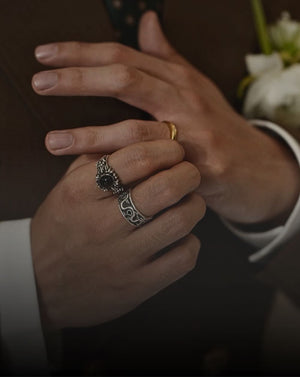
Therefore, after some time, each silver item will have its own unique surface. It will no longer have the perfectly polished shine it once had, but rather a layer of marks created from actual use.
Scratches, the silver luster, and oxidation are all part of the journey. These marks make the silver item no longer an entirely separate object. It begins to have its own life, intertwined with the rhythm of the wearer's life.
Some prefer to keep their silver bright and clean, almost new. Others prefer the gradually subdued color of silver over time, as it makes the item feel more seasoned. Both are ways of living with the product.
The important thing is to understand that silver is not immutable. It can change, and this very change sometimes defines the item's character.

Caring for silver is not about erasing time
Caring for silver does not necessarily mean returning the item to its brand-new state. Proper silver care involves keeping the item durable, clean, and comfortable to wear, while still respecting the character that time has imparted.
For frequently worn silver items, the wearer can gently wipe them with a soft cloth after use, limiting prolonged contact with water, chemicals, perfume, or accumulated sweat. When not in use, silver should be stored in a dry place, avoiding contact with sharp objects to prevent strong impacts.
If the silver has significantly tarnished, it can be cleaned with appropriate specialized solutions or cloths. For products with intricate details, engravings, deep crevices, or intentional oxidation effects, extra care should be taken when cleaning them yourself to avoid removing the original finish.
Alternatively, for the most meticulous care, taking a bit of time to visit a store is a suitable option.
A well-cared-for silver item does not mean it will be free of marks. It can still scratch, tarnish, and change over time. But these changes are within a controlled state: more durable, cleaner, and still retaining the spirit of the design.

For durable items with character
Silver is most beautiful not just when it's new. It's also beautiful in how it accompanies the wearer, recording habits, encounters, journeys, and time.
A well-worn item will inevitably show marks. But it's these very marks that distinguish it from all the items still lying untouched in a display case. It's not just silver. It's silver that has lived with its wearer.
Keeping silver durable doesn't mean keeping it static. Caring for silver isn't about erasing all signs of time. It's about allowing the item to continue its journey longer, maintaining its shape, details, solidity, and still carrying a unique character forged through daily use.
Because ultimately, time doesn't just change silver.
Time also makes a silver item uniquely one's own.

Related: SILVER, TIME, AND THE WEARER'S MARKS