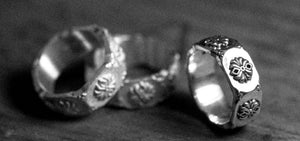
Silver is commonly known for its bright white color and distinctive metallic luster. But on many HELIOS pieces, black is also an important part of the design. It appears in engraved grooves, nestled between layers of patterns, creating a contrast with the bright silver lines.
These dark areas do not appear by chance. Through surface treatment techniques, HELIOS utilizes deep tones to highlight handcrafted lines, clearly revealing the structure and completing the appearance of each design.

WHEN BLACK HIGHLIGHTS THE SILVER LINES
In jewelry making, patina refers to changes in the color and appearance of a metal surface. These can form naturally over time or be created intentionally through surface treatment methods.
With silver, the darkening treatment can produce many shades, from deep gray to black. At HELIOS, black plating is the familiar term for this finishing effect, utilized to create contrast between the light and dark areas of the product.
To understand the role of black, one must carefully observe the structure of a handcrafted silver piece.
Surface patterns are formed from raised lines, recessed grooves, and multiple layers of geometric shapes. When the entire surface reflects light, some small details can become difficult to distinguish. Intentionally darkening the engraved grooves makes the outlines stand out more clearly while creating separation between the layers of patterns.
The bright silver highlights the main lines, while the dark areas emphasize the three-dimensional relief and depth of the structure. Even on a small area such as a ring face or pendant, this contrast can create a significant difference in visual perception.
Black plating does not change the physical depth of the engraved lines. The value of the technique lies in how the tones are controlled so that the inherent details are displayed more clearly.

PATINA IN HELIOS'S DESIGN LANGUAGE
Do not view patina as a dry technical reaction. View it as the way silver remembers its wearer. The recessed areas on the surface gradually darken, preserving the depth of each engraved line. After some time, the silver piece no longer retains the pristine look it had when it left the workshop. It gains more tones, more traces, and more stories.
That is what makes silver different from items that are only beautiful when new. S925 silver can be polished, brightened, and restored when needed. But the traces created during wear are what make the silver piece unique. A small scratch on the side of the ring. A dark area in an engraved groove. A bright area from being touched every day. Together, they create a surface that cannot be replicated.
Why are the traces of time the hardest to replicate?
For HELIOS, patina is not a flaw to be hidden. It is part of the product's life. A silver piece worn long enough will gradually take on the breath of its wearer. It is no longer an external object, but a companion. The longer it stays with the wearer, the more reasons it has to remain.
That is also why patina is so difficult to replicate. You can replicate a shape. You can recreate a new surface. But you cannot fake two years of encounters, three years of habits, or the traces that only appear when a person truly lives with their silver piece.
Time is the final artisan. And each wearer completes the rest.

THE TONES OF SILVER OVER TIME
In addition to the effects created during the making process, the silver surface can also change with use.
Exposure to the environment, natural oxidation, and wearing habits can all affect the tones of the silver. Areas that frequently come into contact may change differently from the engraved grooves deep inside, causing the contrast on the surface to gradually take on its own unique appearance.
This is one of silver's noteworthy characteristics: the appearance of the material does not remain completely static after leaving the workshop.
At HELIOS, the story of patina therefore lies not only in the initial finishing technique, but also extends to how a silver piece changes as it accompanies its wearer. These changes can be preserved as part of the signs of use or cared for and refreshed according to the owner's wishes.

A PART OF THE HELIOS CRAFTSMANSHIP MARK
In a handcrafted silver design, engraved lines, three-dimensional relief, and surface treatment are always closely connected. A dark groove placed in the right position can clarify the outline. The transition between two tones can help complex layers of patterns become more coherent.
For HELIOS, black plating is not simply a color choice. It is part of the finishing process, where small details are treated to fully express the design intent.
For the value of a handcrafted silver piece lies not only in its overall shape. It is also recognized upon close observation, through the lines, surfaces, and light-and-dark transitions that have been meticulously finished.
Black does not hide the beauty of silver. It clarifies the lines that have been created, so that each handcrafted detail can be seen in its true value.